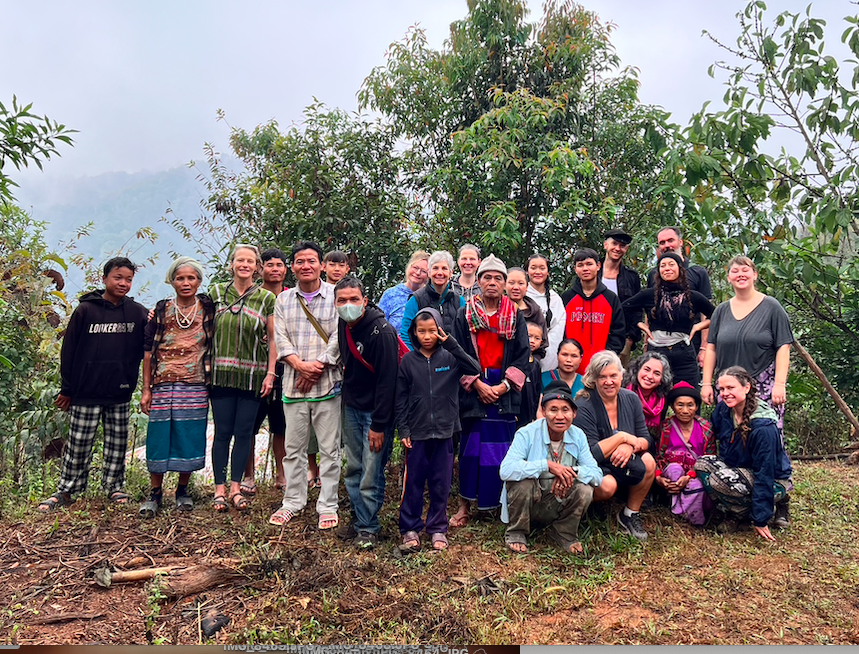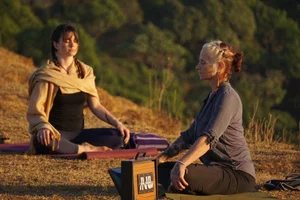
Ten years ago, I volunteered at an elephant sanctuary in Thailand with the desire to spend my days close to these extraordinary animals and to learn how I could be of service. I had the good fortune to meet a man who would change how I saw the whole dynamic, the complicated web of moving parts that did not provide the elephants with what they actually needed.
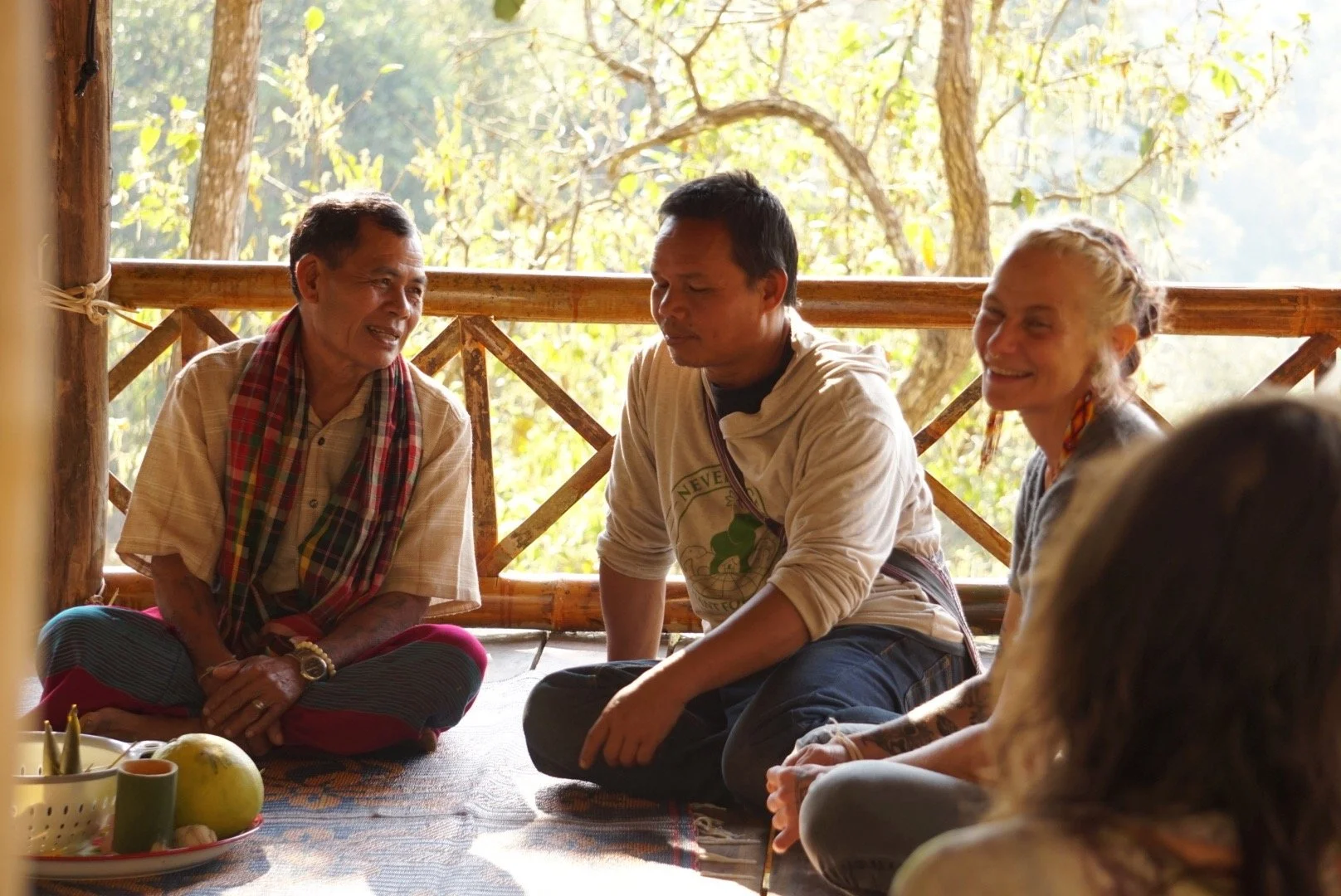
His name is Yo and he is from one of the indigenous tribes of Northern Thailand. In their own native tongue, they call themselves simply "the people", Karen is the English name for them. He educated me on what was actually happening beneath the surface of elephant tourism. Once you really look at it, it's hard to unsee: elephants living in pens, walked along fixed paths to a river to be bathed by tourists, fed rice balls and bananas on a schedule set by humans, not by their own instincts. Imagine asking a human to live that way, in service to another species. Elephants are wild beings, intelligent, family-oriented, deeply conscious. They were never meant to live like this.
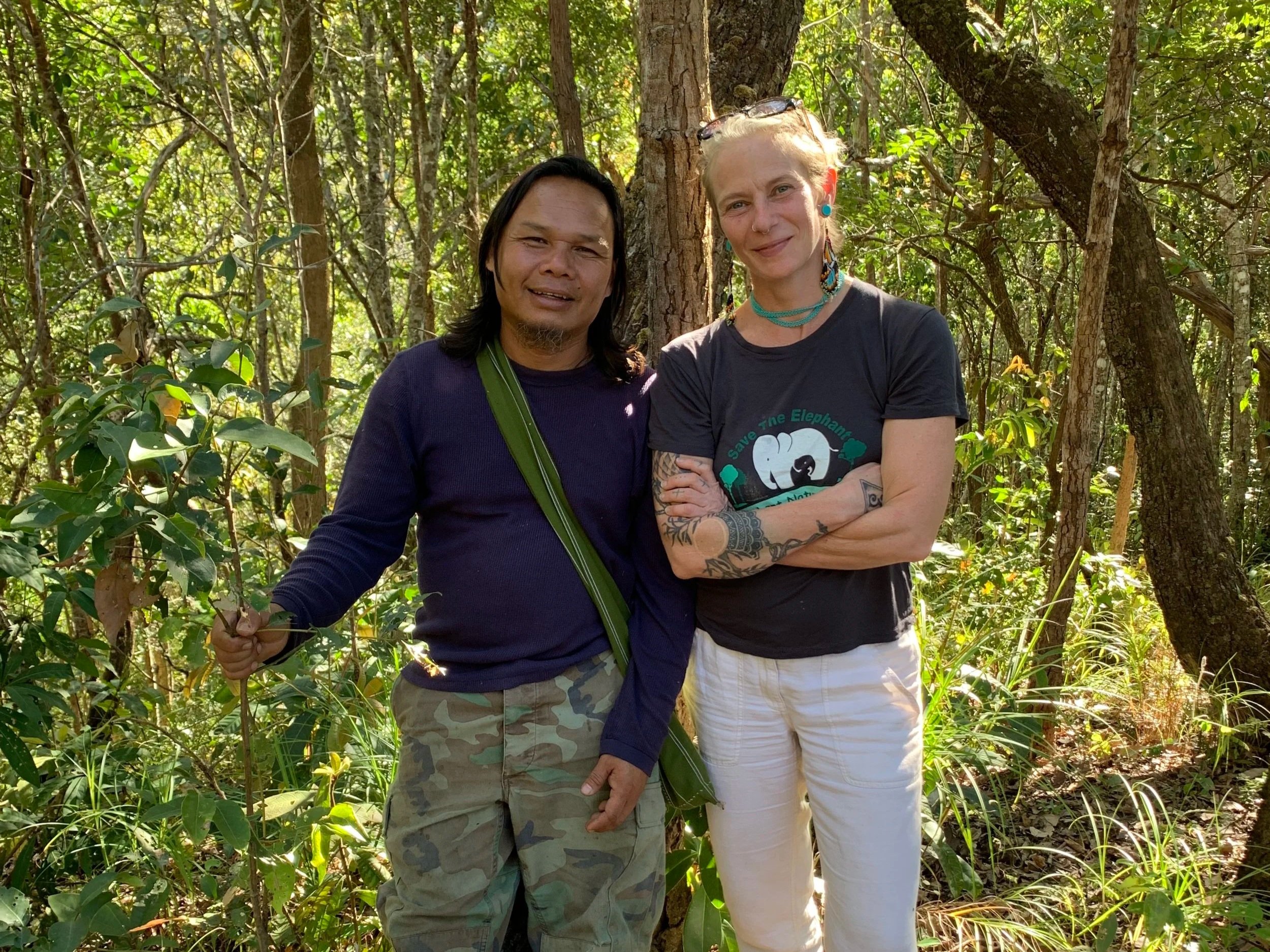
A note on the name: "Karen" isn't what these communities call themselves, it's an outside name, likely brought into Thailand by missionaries from a Burmese word whose meaning is still debated. I use "Karen" throughout this piece because it's the term most familiar to readers, but it's worth remembering it was given, not chosen.
How We Got Here
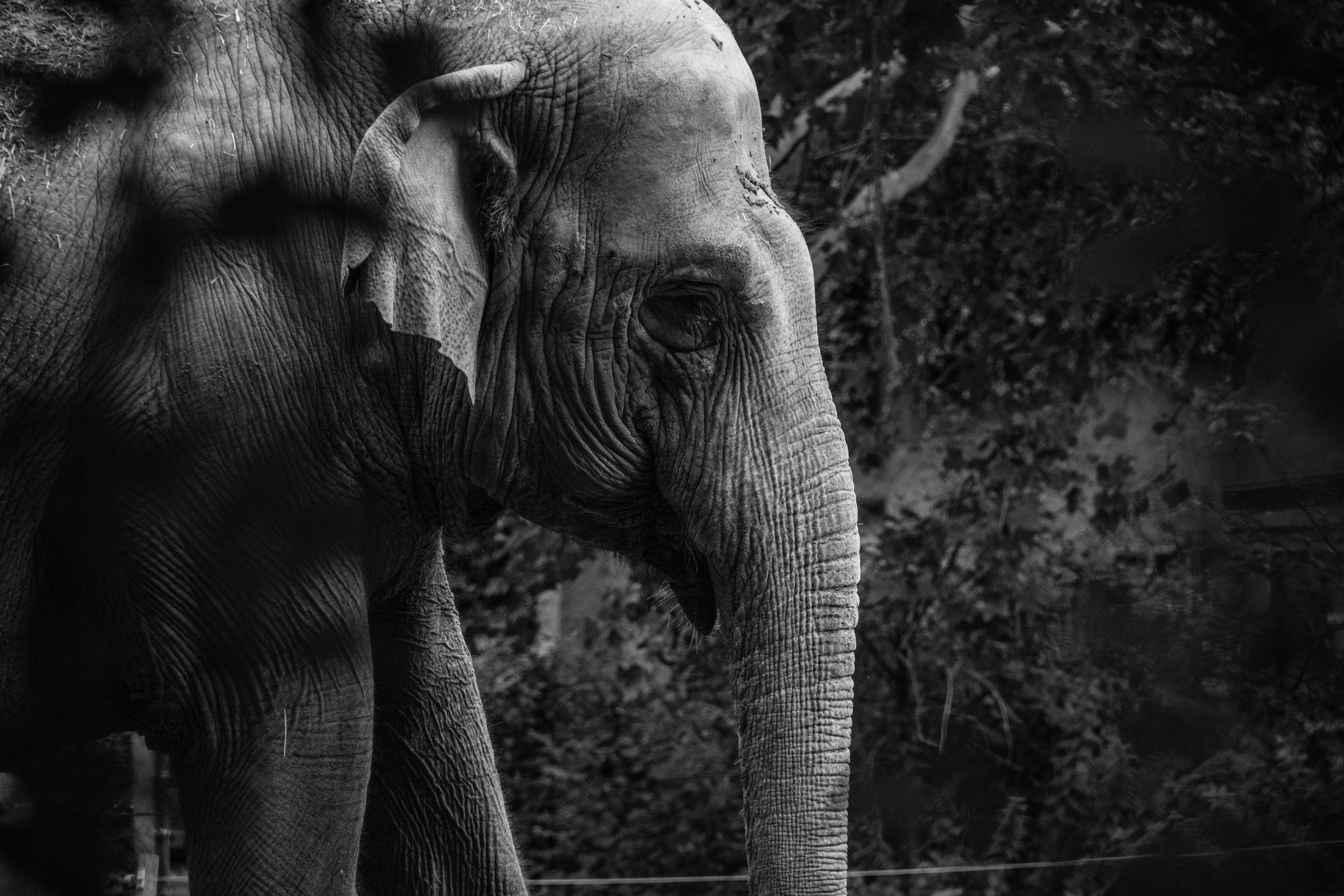
The Karen people have lived alongside elephants for generations, closer to family than to a work animal. Elephants spent their days foraging freely in the forest, returning to the family or village in the evening, sometimes cared for by the same family across generations. The relationship was built on trust and companionship rather than confinement, rooted in animist traditions that saw elephants as something closer to spiritual kin than property.
That relationship changed with the arrival of European, mainly British, logging interests in the late 1800s. Thailand (then Siam) was never formally colonized, but by the 1880s, British firms controlled the vast majority of teak logging concessions in the north, and foreign companies logged the region's forests in earnest for decades. Karen communities were drawn into that economy, and their elephants went from occasional working partners to essential industrial labor.
When commercial logging was finally banned in 1989, after catastrophic floods made worse by decades of deforestation, many elephants and their handlers were suddenly out of work. Tourism filled the gap: elephants were rented out to cities and zoos, and eventually the sanctuary model was born. It was, in many ways, a well-intentioned solution to a crisis. But it kept elephants living in a human-built world instead of in a wild one.
Across that same century, Thailand's forest cover fell from roughly 70% in the early 1900s to around 30% today, the compounded result of colonial-era logging, and the decades of agricultural expansion that followed.
Why the Forest Still Isn't Coming Back
Many Karen communities want their elephants back in the wild, but it isn't that simple. Much of the elephants' historic habitat has since been cleared for large-scale corn cultivation, grown not for people, but to feed Thailand's animal feed industry. This isn't small-scale farming choice; it runs through contract agreements with agribusiness companies, who supply farmers with seed, fertilizer, herbicides, and pesticides as loans to be repaid at harvest. Farmers become dependent on the chemicals and the debt cycle just to get by, and the land pays the price alongside them. The habitat isn't just gone, it's locked into a system that makes it hard to imagine bringing it back without another way for people to make a living.
The Real Work: Helping the Humans
This is the heart of what ten years of this work has taught me: the deepest way to help the elephants is to help the people whose lives are woven together with theirs. Support the people, and the benefit ripples outward, to the land, to the forest, and eventually, back to the elephants.
In the years between meeting Yo and where things stand now, I kept teaching retreats, bringing people to Northern Thailand to learn, and to be changed the way I was changed. One student, Jessica Brocanelli, got deeply invested in what she saw here, and she went on to start a coffee business, Wild Nomad Coffee, growing shade-grown coffee under the forest canopy alongside Yo's village. I'm not part of that business myself, my role has stayed with the retreats, bringing people over for education, and for the kind of mental and mind wellness that comes from encountering something this much bigger than yourself.
The model is simple, but it works on every level: the coffee needs the trees, so the forest stays standing. It earns families far more than renting out elephants ever did, so they no longer need that income. And elephants don't damage the coffee plants, so as the forest returns, there's room for them to return too.
It's taken a decade of learning, mistakes, and relationship-building, through Yo, through his village, through the networks built over years of bringing students and visitors to Northern Thailand, to arrive at something that actually holds together.
What This Means for the Retreats
The retreats we bring people on are meant to be educational, life-changing experiences, but the elephants stay at the center of that, not us. Our desire to commune with them, to touch them, to feel close to them, isn't the priority, even when that closeness is exactly what drew us there in the first place. It's a hard lesson, learning not to center ourselves. But I've come to believe the health and wellbeing of all creatures, elephants, forests, people, depends on exactly that.